
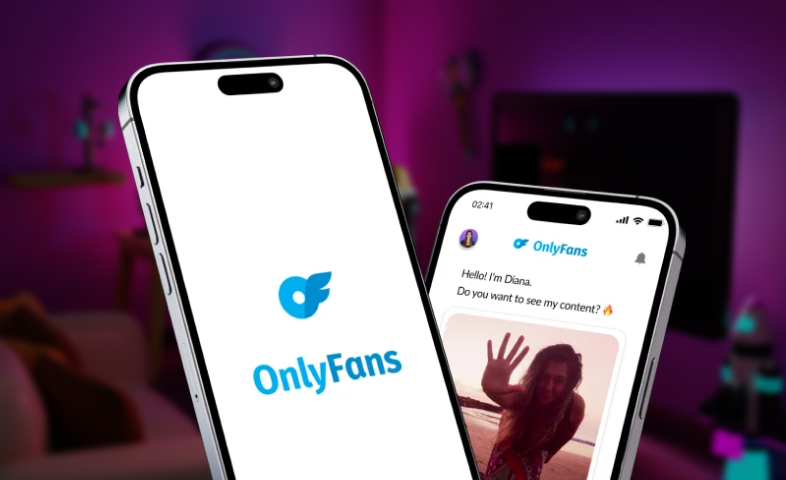
The OnlyFans platform has achieved a feat that even the most ambitious digital projects rarely manage
From a niche startup to a global ecosystem with millions of creators and users—its growth has become a prime example of how the right monetization model and the right timing can create an entire industry.
OnlyFans was launched in 2016 by entrepreneur Timothy Stockley. Initially, the idea was quite simple: to give creators the opportunity to earn money directly from subscriptions, without intermediaries or complex advertising schemes. At the time, the market was already saturated with social platforms like Instagram and YouTube, but they all shared one common trait—a reliance on advertising. OnlyFans offered an alternative: paid access to content as the primary source of income.
📌 Growth Point: The Impact of the Pandemic
The turning point came during the COVID-19 pandemic. Lockdowns, job losses, and the rise in digital consumption led thousands of people to start looking for new ways to make money online. OnlyFans was ideally positioned: low barriers to entry, flexibility, and the ability to start earning income quickly. During this period, the platform grew exponentially and attracted the attention of a wide audience.
However, this success was no accident. Several key factors underpin this growth. The first is the direct connection between the creator and the subscriber. Unlike traditional platforms, there are no complex algorithms controlling reach here. The creator manages their own audience and income.
Why the model proved successful
1. Direct connection with the audience
The main strength of OnlyFans lies in the direct connection between the creator and the audience. There are no complex algorithms here that decide who will see the content. Everything is built on personal branding, trust, and the ability to hold subscribers’ attention.
2. Эксклюзивность контента
The second factor is the economics of exclusivity. Users aren’t just paying for content; they’re paying for the feeling of having access to something private and personal. This fosters deeper engagement and increases the value of the subscription.
3. Platform Flexibility
Although the platform is often associated with adult content, fitness trainers, musicians, artists, and bloggers have successfully built their businesses on it. This expands the market and makes the business model more sustainable.

👥 The Influence of Public Figures
One of the key factors that accelerated OnlyFans’ growth was the participation of well-known media figures. In its early stages, the platform developed primarily through niche creators, but it was the arrival of celebrities that brought it into the mainstream media spotlight.
When public figures with established followings began signing up for OnlyFans, it dramatically changed perceptions of the service. For example, Bella Thorne was one of the first stars to loudly announce her presence on the platform. The launch of her account was accompanied by massive interest from the media and users, which led to a sharp influx of new sign-ups.
However, it’s not just about isolated cases. Media personalities fulfill several important functions in the platform’s development.
First, they lend legitimacy to the service. When famous actors, musicians, or bloggers start using the platform, it lowers the barrier to acceptance for a broad audience. OnlyFans ceases to be perceived as an exclusively niche product and becomes part of the mainstream.
Second, they bring a ready-made audience with them. Popular figures already have millions of followers on social media platforms like Instagram or Twitter (X). By redirecting even a small percentage of this audience to OnlyFans, they generate a significant influx of users without any additional costs to the platform itself.
Third, media personalities set new standards for content. They often experiment with formats, levels of candor, and ways of interacting with their audience. This influences other creators, sets trends, and broadens the understanding of what kind of content can be successful.
Current Status and Significance
Today, OnlyFans occupies a special place in the digital economy and has long since gone beyond being “just a subscription platform.” It can be viewed as a separate ecosystem where content, personal branding, direct monetization, and social media intersect.
While the project was initially viewed as an experiment with a subscription model, it has now evolved into a sustainable business structure with millions of creators and users worldwide. At the same time, the key difference between OnlyFans and traditional social networks like Instagram or YouTube is that value here is created not by algorithms and advertising, but by direct relationships between creators and their audiences.
In fact, the platform has changed the very approach to content monetization. Previously, most services were built on the “attention → advertising → revenue” model, where the user is the product for the advertiser. OnlyFans has turned this model on its head: now the user pays the creator directly, bypassing intermediaries. This has made revenue more predictable and allowed content creators to build sustainable businesses rather than depend on algorithmic fluctuations in reach.
However, the platform’s current position cannot be viewed solely through the lens of growth. As it has scaled, challenges have intensified: issues of regulation, payment restrictions, content moderation, and reputational perception. This forces the company to constantly balance the freedom of creators with the demands of external regulators.
Despite this, OnlyFans’ significance in the digital landscape continues to grow. It has become a symbol of a new model for the internet, where content is directly converted into revenue, and the relationship between the creator and the audience becomes the primary economic resource.
💡 Conclusion
Ultimately, today OnlyFans is not just a platform, but a reflection of a global shift: from mass media and algorithmic feeds to personalized, direct, and monetizable digital relationships.